
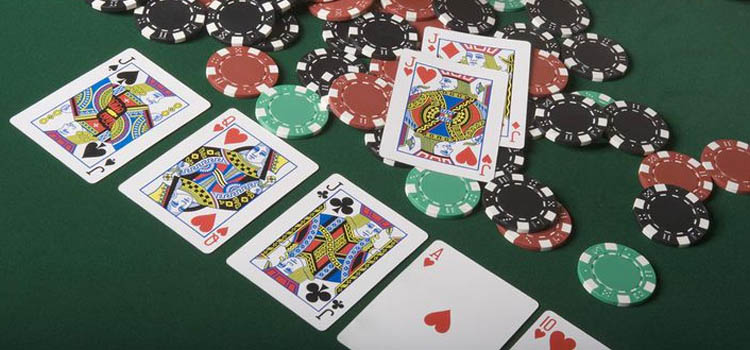
You may also have noticed that there is no single path to take. A player can use several strategies in the same game. In this article we bring you the most basic ones to help you improve your level of play and, of course, to win.
Reviewing the basics
Before we get into more complex concepts, let's remember a basic strategy: to become as familiar as possible with the basic rules of poker. It sounds obvious, but mastering the game can save you a lot of money in the future.
On the other hand, the basis of poker is that everything focuses on decisions. Play your best in every game, without thinking that you must win at all costs, otherwise you could end up retiring sooner than expected.
An example of the power of decisions is the influence that you as a player can have on the decisions of your opponents. It may not be one of the most stable strategies, but the bluff exists for a reason: to affect the performance of others and make a profit from it.
Another simple technique to implement: be patient. Professional players differ from amateurs in that they know how to stay cool-headed during a game, even if the cards aren't the best. Most hands in Texas Hold'em will be weak, keep that in mind.
Winning tactics in poker
After reviewing some basic maneuvers, we'll now give you some simple poker strategies to implement that will help you master your game:
Basic Strategy 1: Thinking about your position
In poker, the order in which players act is already established for each round. In this sense, the player who is last is the one who has the most information, so he can make a more considered decision about how to proceed in the game.
Also, the person to the dealer's right, the bouton, potentially has more power than the dealer himself, as he can raise the bet and take it out of the game.
If you are in one of the top positions on the table, try to be more selective with the hands you play. On the contrary, if you are in the last positions, you will have a certain advantage when it comes to acting.
Basic strategy 2: evaluate the best hand on the table.
To find out if someone has the best hand, pay attention to the number of players at the table and the previous move. If you see the bets increase, it could mean that one of your opponents thinks he has the best hand.
If, on the other hand, you're the one with the best hand, it's all a matter of recognizing it. Having it and not knowing how to do it will cause you to lose valuable betting opportunities. The opposite scenario can be worse, that you don't know how to read your cards well and this costs you dearly.
Therefore, pay close attention to what happens at the table, this will save you expensive decisions.
Basic strategy 3: calculate the Odds and Outs.
Entering a poker game without knowing how to do this calculation would be like driving blindfolded. You may be lucky in some rounds, but most likely you'll end up crashing.
What are they?
Odds are the odds of winning that a certain hand gives you.
Outs are the cards that haven't come out yet and have the potential to improve your hand.
Calculating the odds will allow you to determine when a hand is profitable and when it is not, and depending on it, withdraw or bet. Here's how to do it:
- Number of outs x 2: the probability of improving your hand with the next card.
- Number of outs x 4: the probability of improving your hand on the turn and/or river.
If you have a flush with 9 outs, your chance of winning will be 18% of winning [9 x 2].
Basic Strategy 4: Know when to raise the bet
Now that you've done your evaluation of the poker table situation. You have several options, one of which is to raise. When?
If you think you have the best hand: bet big. This will scare weaker players into retiring, reduce competition and increase your odds.
If you have a regular hand and you don't need to see any more cards to win, increasing the bet can cause players who do need the flop to fold.
Bluff bet. If you don't have anything, but you think you can manipulate your opponents by making them think you do when you raise your bet, try it. It's a risk, but it can pay off. Even if you're caught, you can recover with the flop.
Bet on information. If you bet, the other players must raise it, go, or withdraw. This can give you the necessary data about the cards they hold in their hands.
Popular Posts

3 TIPS ON HOW TO CHOOSE THE BEST ONLINE CASINO?
17 September

Basic strategies
4 July

3-card poker
10 July

Tournaments Strategies
1 August